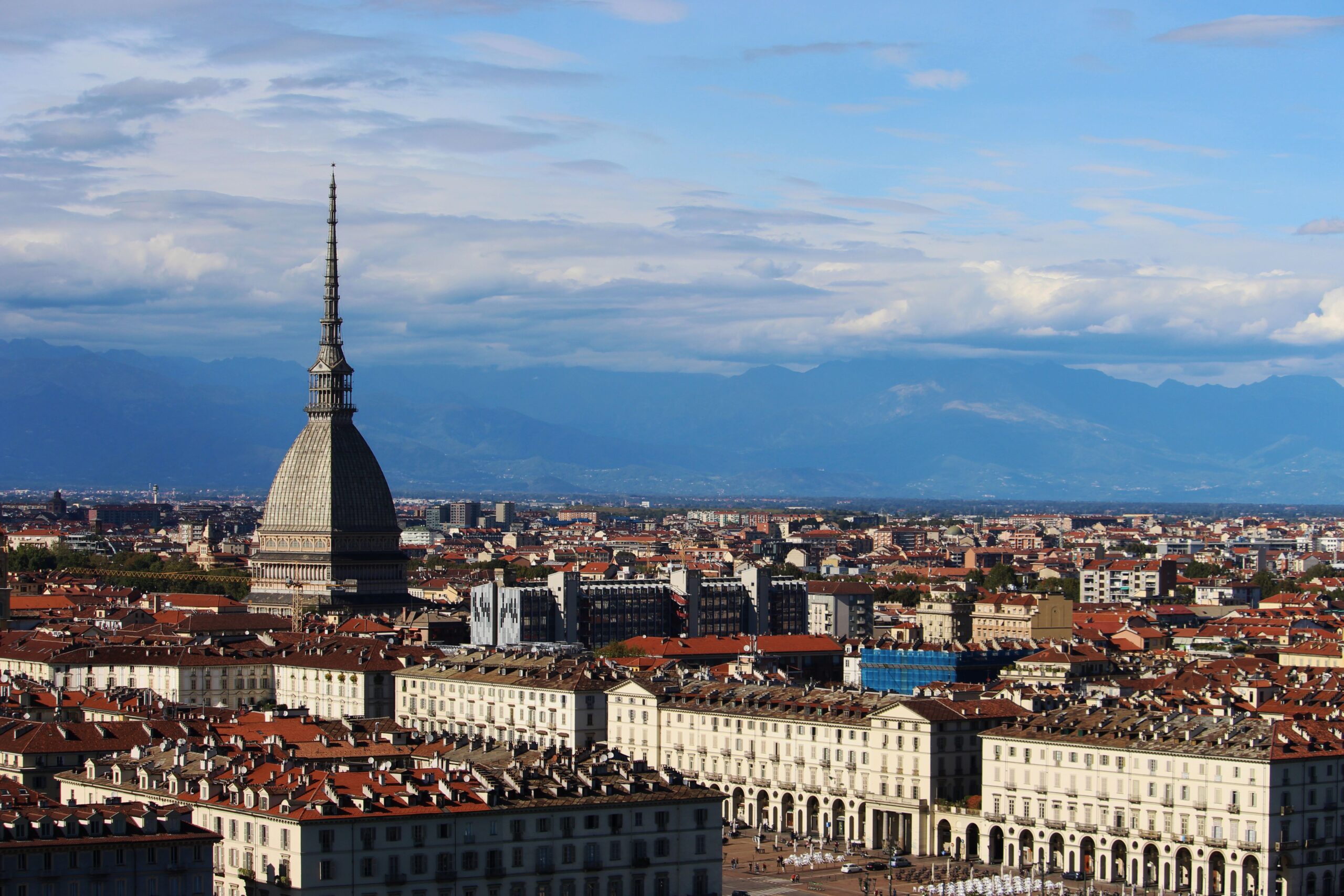
First International Giovanni Arrighi Conference
Turin, Italy | 16–18 June 2027
Deadline to submit abstracts is December 30, 2026. Find abstract submission form here.
Call for Papers:
Giovanni Arrighi understood systemic chaos as the turbulent and open-ended interval between one hegemonic order and the next: a historical conjuncture in which established rules are increasingly contested, the centres and geographies of capital accumulation are reorganised, and old forms of political, economic and social order lose their coherence before new ones have fully crystallised.
We are living through such an interval.
The erosion of the US-centred international order, the rise of China and East Asia, renewed geopolitical and geoeconomic rivalries, financial instability, accelerating ecological breakdown, transformations in warfare, deepening social inequalities and the reorganisation of global flows of energy, resources, commodities and labour all point toward a profound restructuring of the world system. Yet neither the direction nor the outcome of this transformation is predetermined.
The First International Giovanni Arrighi Conference, to be held in Turin on 16, 17 and 18 June 2027, invites scholars from different disciplines, theoretical traditions and geographical contexts to examine the contemporary conjuncture and historical precedents through the concept of systemic chaos and, more broadly, through a critical engagement with Giovanni Arrighi’s intellectual legacy.
Rather than treating Arrighi’s work as a closed theoretical system or an object of commemoration, the conference seeks to place it in dialogue, tension and confrontation with contemporary problems and alternative traditions of thought. Arrighi’s own work crossed the conventional boundaries separating sociology, history, political economy, geography, anthropology and international relations. In the same spirit, the conference particularly welcomes interdisciplinary and transdisciplinary approaches capable of connecting transformations occurring at different geographical scales and across different spheres of social life.
We invite individual papers and collective panels. Possible themes include, but are not limited to:
Hegemonic transitions and the changing world order
The crisis of US hegemony; the rise of China and East Asia; transformations of sovereignty and global governance; competing projects of world order; the specific features of the current transition with respect to previous periods of hegemonic crisis; the forms of order – or prolonged disorder – that might emerge from the current conjuncture.
The material foundations of world order
The shifting centres of capital accumulation in past and present hegemonic crises; competition over energy, food, water, critical raw materials, maritime and terrestrial routes; logistics, infrastructures and supply chains; decarbonization and energy transition; technology and the new horizons of capital accumulation; the material conditions for new cycles of accumulation.
Uneven development and changing regional orders
The reorganisation of global production and trade; past and present uneven development within and beyond the Global South; development paths in an increasingly fragmented world economy; regionalisation and the formation, transformation and dissolution of regional orders.
Financialisation and systemic chaos
Financial expansions in historical systemic cycles; the relationship between financialisation, productive capitalism and hegemonic decline; money, monetary power, debt and financial instability; the reconfiguration of economic-financial agents; the changing relationship between finance and states.
Imperialism and militarisation
Changing geometries of imperialism; the past and present relation between war, peace and hegemonic order; military power and the control of territories, infrastructures and strategic flows; asymmetric warfare; sanctions, blockades and the weaponisation of economic interdependence; the relationship between military industry and accumulation.
Class, labour and social conflict in the twenty-first century
Relations between systemic crisis and class struggle; past and present forms of social mobilisation around the world; the political consequences of growing inequalities and precarisation.
Ideologies and political forms in periods of systemic crisis
Governance in the hegemonic transition; liberalism, socialism, authoritarianism, nationalism, and fascism in the world-system; past and present shifts from hegemony to dominion; the historical and current rise of new hegemonic ideologies, morality and values; the relationship between systemic instability and transformations in political subjectivity and collective identities.
Systemic chaos and socio-ecological crisis
Political ecology and world-systemic transformation; capitalism as an ecological regime; climate change and the limits of ecological surplus; extractivism and green colonialism; ecological collapse and socio-natural disasters; anti-systemic forces and ecological crisis; ecology of war.
Gender, race and intersectional perspectives on systemic transformation
Gendered and racialised dimensions of accumulation, crisis and social reproduction; the uneven distribution of the costs of systemic transitions; migration, borders and citizenship; intersectional approaches to global inequality and political conflict.
These themes are intended as invitations rather than boundaries. We particularly encourage contributions that connect several of these dimensions, explore neglected regions and historical experiences, compare the contemporary transition with previous episodes of systemic chaos, or critically revise the conceptual tools through which global transformations are conventionally understood.
SUBMISSION GUIDELINES
The conference welcomes contributions from sociology, history, political economy, geography, international relations, political science, anthropology, philosophy, ecological thought and neighbouring fields, as well as work that deliberately moves across disciplinary divisions.
We encourage participation from scholars at different career stages and from different regions of the world. One of the aims of the conference is not only to advance scholarly debate, but also to create a durable space for exchange among researchers working on questions connected to Arrighi’s legacy and to strengthen an international community of critical inquiry.
We welcome proposals for:
- Individual papers: abstract of approximately 300–500 words, together with a short biographical note;
- Panels: proposals including a short rationale for the panel and abstracts for 3–4 individual contributions;
Proposals should explain clearly the research question, argument and empirical or theoretical contribution, and indicate how the proposed intervention speaks to the conference’s overarching concerns.
Submission deadline: 30 December 2026
Notification of acceptance: 30 January 2027
Conference: 16–18 June 2027
Proposals should be submitted exclusively through this Google Form.
The working language of the conference will be English. Papers in other languages will be considered on a case-by-case basis.
A limited number of travel grants or forms of financial assistance may be made available, particularly for early-career researchers and participants traveling from institutions with limited funding and from non European countries. Further information will be provided with the notification of acceptance.
VENUE
The conference will take place in Turin, Italy, at the Polo del ’900 and at the University of Turin, on 16–18 June 2027.
ORGANIZING COMMITTEE
The Giovanni Arrighi Conference is conceived as the first major international gathering promoted by the Giovanni Arrighi Network (https://arrighinetwork.org/), bringing together scholars who wish not simply to preserve Arrighi’s intellectual legacy, but to use it, challenge it and extend it in order to understand a world in transformation.
The conference is organised as part of a project coordinated by the Associazione culturale Vera Nocentini in Turin, in collaboration with the Arrighi Center for Global Studies at Johns Hopkins University and with the support of Compagnia di San Paolo.
CONTACTS
Any enquiries can be sent by email to Associazione culturale Vera Nocentini (fondazionenocentini@gmail.com), copying in Dr. Aurora Iannello (aurora.iannello7@gmail.com) and Prof. Beverly J. Silver (silver@jhu.edu)
Updated information about the conference and the Call for Papers will be available on the websites of Associazione culturale Vera Nocentini (https://www.fondazioneveranocentini.it/) and of the Arrighi Network (https://arrighinetwork.org/).